Research from the University of Winnipeg suggests that up to 90% of snap product judgements are based on color alone. Before a customer reads your headline, your price, or your product description, they've already formed a feeling about your brand. That feeling is color.
Color is a business decision, not a preference
Most brands pick colors they like. Smart brands pick colors that do a job. Those two things occasionally overlap, but they start from different places. A brand that treats color as a preference ends up with something that looks pleasant but doesn't convert. A brand that treats color as a strategic tool builds something that communicates trust, urgency, premium positioning, or accessibility — whatever the business actually needs.
What the research says
Color associations vary by culture, age, and context — but within Western DTC e-commerce, certain patterns are consistent enough to be useful. These aren't rules. They're starting points.
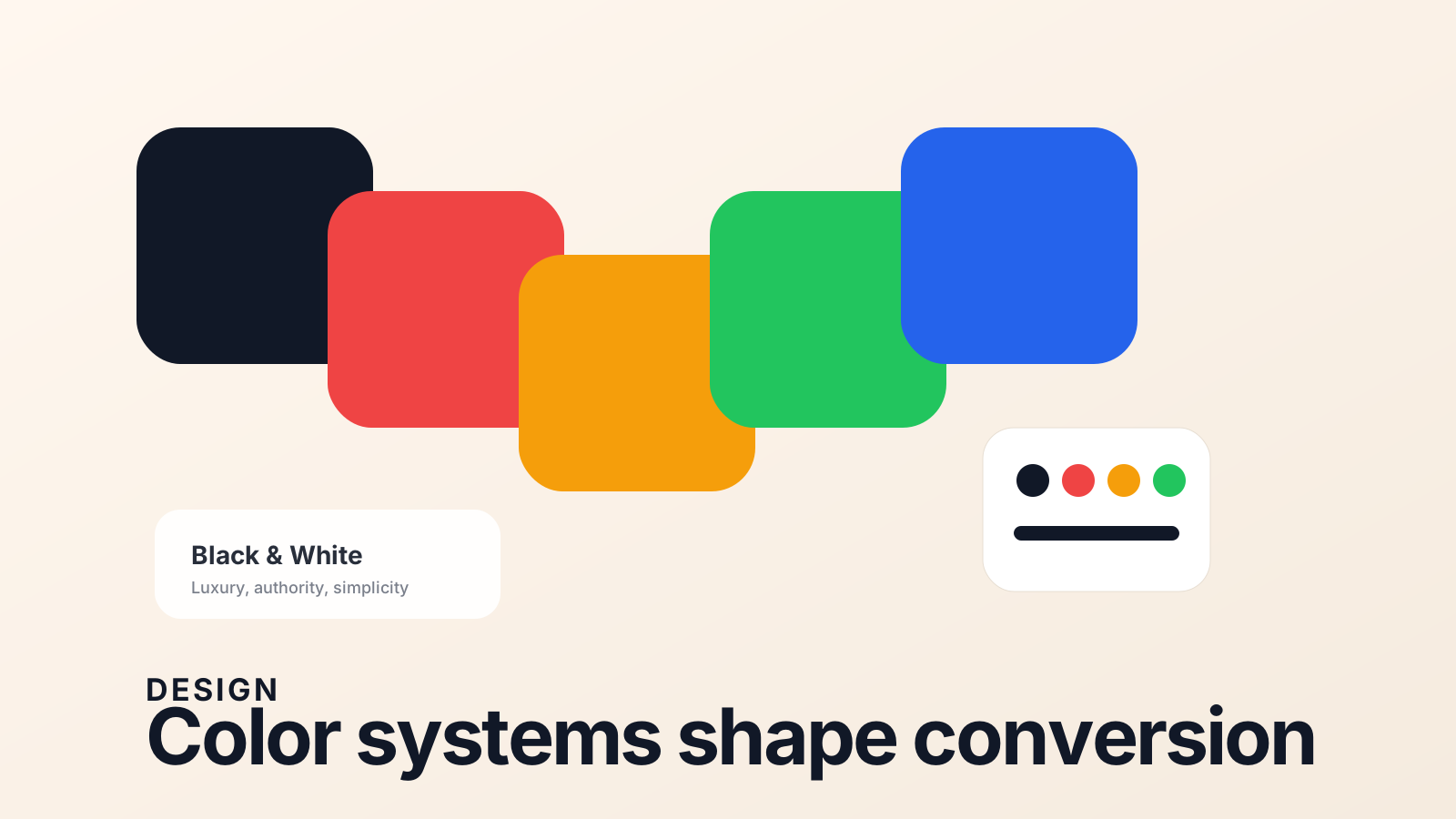
- ✓Black and white: luxury, authority, simplicity — used by high-margin fashion and beauty brands to signal premium positioning without noise
- ✓Green: health, sustainability, trust — effective for wellness, food, and eco-conscious brands where credibility is the conversion barrier
- ✓Red and orange: urgency, energy, appetite — strongest in CTAs and sale mechanics, where attention and action are the primary goals
- ✓Blue: trust, reliability, calm — dominant in fintech and B2B because it reduces purchase anxiety in high-consideration decisions
- ✓Yellow and warm neutrals: optimism, accessibility, approachability — effective for brands targeting broader demographics or lower price points
Color in practice: the Shopify context
On Shopify, color strategy plays out at three levels. The first is brand color — your primary and secondary palette, which sets the overall emotional register. The second is functional color — how you use color in CTAs, trust signals, pricing, and badges (Sale, New, Best Seller). The third is contextual color — how your palette adapts across pages (product, collection, cart, checkout) to guide the customer toward purchase.
The checkout is where this matters most, and where most brands get it wrong. A checkout page that maintains the brand palette feels trustworthy. One that suddenly shifts to generic Shopify defaults creates cognitive friction — a subtle but measurable drop in completion rates.
Building a color system that converts
The brands we build storefronts for don't pick colors — they build color systems. A documented set of decisions: primary palette, secondary palette, functional color rules, contrast ratios for accessibility, and color behavior in dark and light contexts. It takes more time upfront. It produces measurably better outcomes than iterating on gut feeling.
"The best Shopify color decisions aren't creative choices. They're conversion choices expressed through design."
— Thought Bulb Design Team
If you're doing a Shopify redesign and treating color as an afterthought — or inheriting a palette from a brand guidelines deck that was never designed for digital — it's worth getting deliberate about it before the build starts. It's one of the cheapest interventions and one of the highest-leverage ones.