Shopify's app ecosystem is one of its biggest strengths. It is also one of the fastest ways to accumulate cost, latency, conflicting UX, and duplicated logic. Installing an app is easy. Operating a stack of overlapping apps at scale is not.
An app is the right choice when the problem is common
If you need reviews, subscriptions, search, or a standard loyalty layer, the market has already solved those problems well enough. Buying proven software beats funding custom development for the sake of feeling bespoke.
Custom starts to win when the store logic is the differentiator
- ✓Your merchandising rules are unique and no app handles them cleanly
- ✓The app UI breaks the brand or injects inconsistent markup
- ✓You are paying multiple subscriptions to approximate one workflow
- ✓The app creates measurable speed or script-execution drag
- ✓You need operational workflows that the app was never designed to support
The strongest signal is usually not price. It is friction. If the team keeps working around the tool, exporting data, or manually correcting storefront behaviour after every campaign, the software is no longer serving the business.
The custom middle ground most brands miss
A custom app does not have to mean a giant product build. Often it means a small private app, a lightweight admin extension, a checkout extension, or a backend service that connects Shopify to the rest of the stack more intelligently than generic middleware can.
"You should not custom-build because apps are bad. You should custom-build when your operating model is specific enough that generic software starts creating drag."
— Thought Bulb Product Team
A practical buying rule
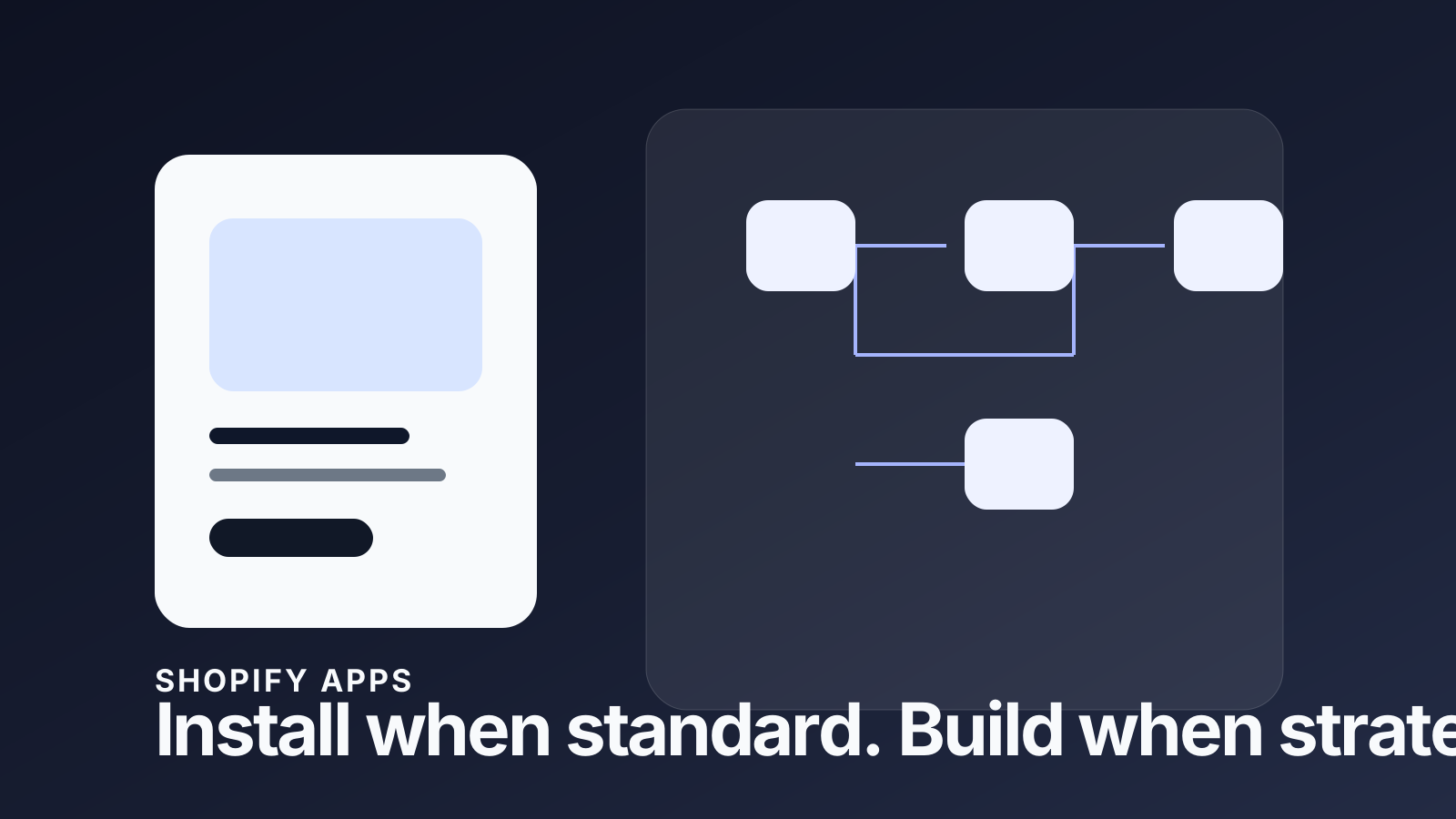
Install first when the workflow is standard. Build when the workflow is core to margin, retention, or conversion and the existing tools keep leaking time. The goal is not fewer apps on principle. The goal is a cleaner system that costs less attention to run.