A lot of brands buy development support the way they buy insurance: they know they need coverage, but they aren't sure what kind. That's how you end up with retainers that are too vague, ticket-based support that moves too slowly, or one-off projects solving symptoms instead of the system causing them.
Start with the shape of the work
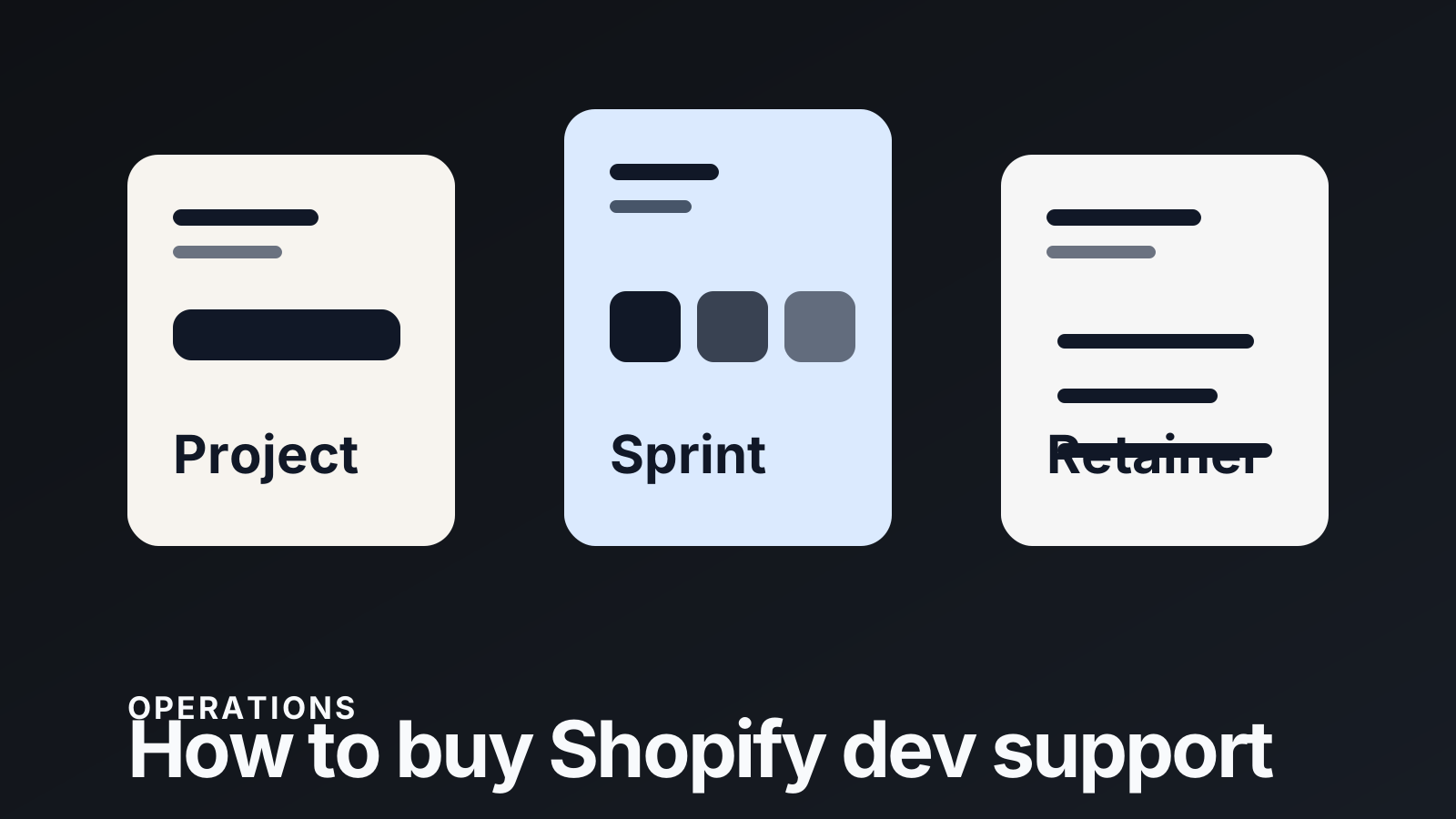
If your roadmap is known and finite, fixed-scope project work is usually the cleanest option. If your backlog is strategic and changing every week, sprint-based support wins. If your store is mission-critical, has multiple stakeholders, and regularly needs launches, fixes, CRO, and coordination, a proper retainer often makes more sense than renegotiating scope every month.
When each model works best
- ✓Fixed-scope project: redesigns, migrations, one major feature set, a specific app build
- ✓Sprint support: quarterly CRO work, merchandising initiatives, roadmap experiments, launch cycles
- ✓Retainer: ongoing Shopify teams with recurring technical debt, trading pressure, and operational change
- ✓Emergency support only: rarely the cheapest option, but sometimes necessary during unstable growth periods
The mistake brands make is choosing the cheaper-looking model instead of the one that matches the cadence of the work. A low retainer with undefined scope becomes frustrating fast. A string of tiny projects becomes expensive through context loss. The right model reduces decision overhead, not just hourly cost.
Questions worth asking before you buy support
- ✓Do we need shipping capacity or strategic technical judgment?
- ✓Is our backlog stable enough to scope, or does it change weekly?
- ✓Who internally signs off on work before it starts?
- ✓What work is recurring enough that buying context once will save money later?
"The best support model is the one that fits the volatility of your store, not the one that sounds the safest in a proposal."
— Robin Singh, Thought Bulb
A practical rule of thumb
If the work changes every two weeks, don't force it into a fixed project. If the work is tightly defined, don't pay retainer overhead to keep rediscovering the same scope. And if your team can't yet prioritize cleanly, the first step probably isn't more dev time — it's a sharper operating model. Support is only as effective as the decision-making around it.